Having gone through branch circuits and feeders in the previous 16-part series, let’s move on with the in-depth look at many of the National Electrical Code requirements electrical contractors deal with every day. It is now time to focus on the equipment and conductors that supply it all: the service.
The NEC defines a service as, “The conductors and equipment connecting the serving utility to the wiring system of the premises served.” This means that the service will consist of conductors to connect to the utility, but also switches, overcurrent devices, metering equipment and other equipment that serves the purpose of being connected to the utility. Often these conductors and equipment are ahead of any overcurrent protection or disconnecting means, in which case we need to take a slightly different approach to safe installations. So, let’s dive right in!
The service point
First things first: how do we know which conductors and equipment belong to the service and which belong to the utility? This question needs to be answered.
There is a point upstream from the service disconnecting means chosen as the point where ownership switches from the utility to the electrical system’s owner. This is called the service point. Typically, the service point is defined by the utility and can be as easy to see as the point where the overhead conductors attach to the conductors coming down the side of the building or maybe it is the line-side terminals in the meter enclosure.
But sometimes the service point is a little trickier to find, as it might be in an underground junction box or the line side of the utility transformer. The only true way to know where the service point actually lies is to ask the utility where they stop and the premises wiring system begins.
The service point is the place where ownership changes hands, and it is also typically where the installation code switches. Upstream from the service point is covered by IEEE C2: National Electrical Safety Code (NESC) and downstream is covered by our favorite code, the NEC.
However, sometimes the installation might be a little different. Take, for instance, a large industrial complex where the service point is located where the transmission wires come into a medium-voltage substation, where the voltage is stepped down from much higher voltages to something around 13.8 kilovolts and then distributed throughout the campus. Often the distribution system still looks and acts just like our local neighborhood utility distribution and will still be installed per the NESC, even though it is on the customer side of the utility-defined service point. However, these systems are not the focus of this article.
The service conductor
Once we understand where the service point is, it helps us to understand which conductors we are dealing with. The NEC defines several different types of conductors, all with their own special set of requirements, so knowing which conductor is which helps us apply the NEC requirements.
Let’s start with the conductors that run from the utility transformer to the building. These will either be overhead or underground and either downstream or upstream from the service point. If they are upstream and owned by the utility, they are referred to as service drop (overhead) or service lateral (underground) conductors. If they are downstream and owned by the building owner, they are referred to as overhead service conductors or underground service conductors. The generic term of service conductor also applies to any conductor between the service point and the service disconnecting means, regardless of whether it is overhead or underground.
The final set of service conductors that connect to the terminals of the service equipment are defined as the service entrance conductors. For overhead service conductors, these typically are the conductors enclosed in the service mast and terminate to the overhead service conductors or service drop with a splice up in the air. For underground service conductors, these are often just a short run of conductor from the load side of the metering equipment to the line side of the service disconnect. It is also important to note that for service equipment installed outside of the building, the service entrance conductors might not physically enter the building; instead, the term “entrance” is referring to the fact that they enter the service equipment.
The service equipment
Now that we have defined all of the different conductors that might be used in delivering the power to the building, let’s talk about the star of the service: the service equipment. In many installations, this is just a single item of equipment to look at, but that is not always the case.
The NEC defines service equipment as being all of the necessary equipment, which consists of circuit breakers or switches and fuses and their accessories, connected to the serving utility and intended to constitute the main control and disconnect of the serving utility from the premises wiring system. So, the service equipment plays a major role in the premises wiring system as it is what connects and disconnects the building from the utility.
Metering equipment
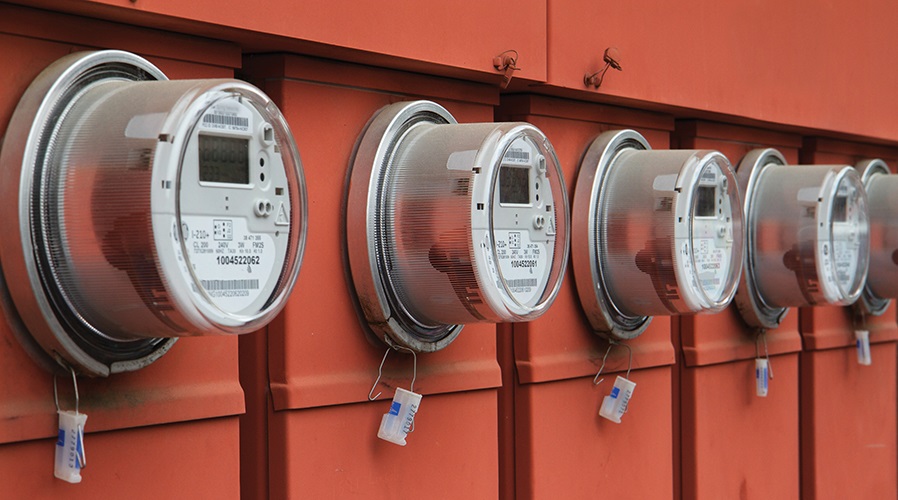
If you notice, there is one other common piece of equipment associated with the service I haven’t mentioned yet, which is the metering equipment. That is because it doesn’t generally fall under the definition of service equipment. Remember that service equipment exists to serve as the main control and disconnect of electrical supply from and to the utility. Metering equipment simply monitors the flow of electrons and is neither controlling nor disconnecting anything from the utility. With that being said, it is still a very important piece of the electrical system, and in some instances can be an integral part of service equipment, such as with meter/main service equipment.
Wiring methods for service conductors
Finally, we need to understand the wiring methods permitted to be used for housing service conductors. These conductors are different from all of the branch circuit and feeder conductors we have previously discussed, as there is generally no overcurrent protection for these conductors besides what the utility system provides, which is usually not much.
It is important to understand what types of material can be used and whether these wiring methods are permitted in the building. Because of this, we will be taking an in-depth look at the requirements for wiring methods and service conductors.
Services are a complex network of conductors, disconnecting means, and overcurrent protective devices with several different terms and components we need to understand to know which requirements we need to be following.
Now that we have gotten some of the terminology out of the way, we can focus on the requirements for service conductors and equipment that keep people and property safe from the hazards that electricity presents. Next month’s article will kick this conversation off with examining requirements that apply to service conductors. We will look at how many services are permitted to supply a building, rules for overhead and underground service conductors, and requirements for the service entrance conductors.
Remember to stay safe and always test before you touch!
stock.adobe.com/Robert Keenan
About The Author

Vigstol is an electrical safety consultant for E-Hazard, a provider of electrical safety consulting and training services. He is also the co-host of E-Hazard’s electrical safety podcast “Plugged Into Safety.” For more information, check out www.e-hazard.com.