One thing about low-voltage electrical work at a museum—it never exactly seems to be easy. Data? Security? Lighting control? Wi-Fi? It doesn’t matter. In linear feet, Point A might be 100 feet away from Point B, but an electrical contractor might require 500 feet of cable to go up a floor or avoid some huge obstacle, such as a stories-high dinosaur skeleton.
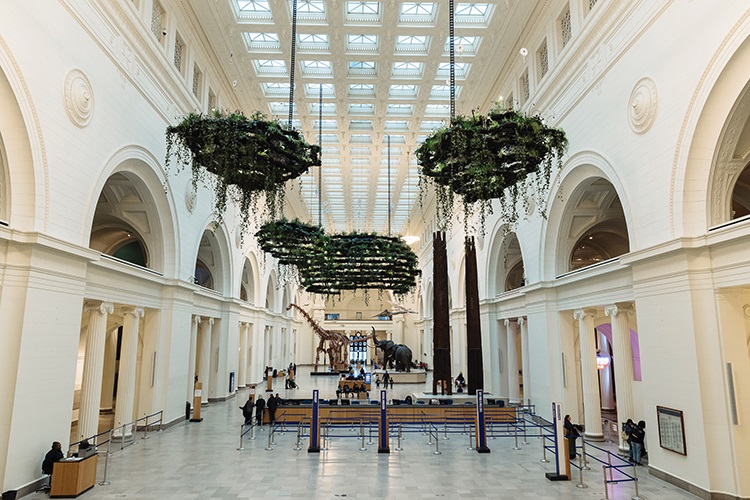
Rob Zschernitz, chief technology officer of the Field Museum of Natural History in Chicago, said the museum is 1.2 million square feet and the building is 100 years old. The museum has a long-standing relationship with Integrated Electrical Services, based in Alsip, Ill.
“They do an amazing job for us,” he said. “They know the building almost better than we do.”
That comes from the decades of service that workers such as Chris Powell, an integrator and project manager for Integrated Electrical Services, have put into the Field Museum. In the 1990s, Powell did work there on a traveling exhibit called Sounds from the Vault, which showcased ancient musical instruments.
“It had everything from power to data,” Powell said. “[There were] many areas where you could play the music and the sound was prerecorded. You could listen to the sounds they made. It was a pretty cool exhibit.”
Powell said the project included low-voltage work from the data infrastructure to the main distribution frame room, “and then they had all their soundboards and systems that were patched in … lighting, sound and music that came out of the touchpads.”
Its configuration makes the Field Museum a tough place to work, which is why having that longstanding relationship is key.
“It’s like a big box with a hole in the middle of it,” Powell said. “It goes from the main floor to the skylights. You can’t get across, so how do you get those scientists the data they need?”
The answer is as simple as it is complex. Powell and his team work around the perimeter of the “hole.” This complex solution is more doable because they understand the infrastructure routes from the ground floor to the fourth floor.
“It’s not the easiest thing to do,” he said. “After being there all those years, it’s easier because you know the building.”
Diversify, diversify!
Josh Mahan is the managing principal for C&C Technology Group, Mahwah, N.J. His firm represents a wide range of low-voltage electrical product manufacturers and works with electrical contractors to navigate everything from standards to new technology.
“Those types of spaces are becoming increasingly technological, the low-voltage cabling projects are becoming very extensive,” Mahan said. “Usually, they are smart spaces now. They are doing a lot of people-counting and monitoring to video surveillance.”
Obviously, facilities such as Chicago’s Field Museum, the Griffin Museum of Science and Industry, the Museum of Contemporary Art Chicago and the Art Institute of Chicago have valuable artifacts. That means low-voltage work is going to include security such as cameras and access control.
But consider that museums are also in the entertainment business, to one degree or another, so a contractor has to be prepared.
“They are increasingly interactive, like video walls, audio programming and all kinds of experiential technology,” he said. “People aren’t cool looking through the plexiglass. We have razor-thin attention spans.”
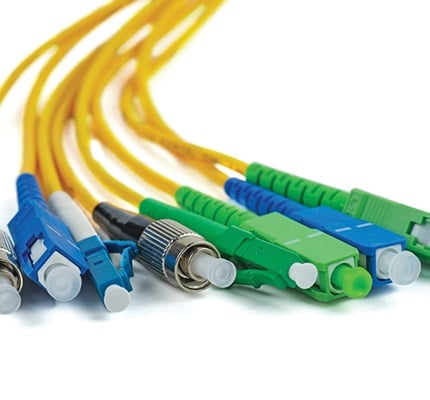
For example, Mahan said video walls are very expensive and challenging to handle and program, with high data transmission over fiber optics.
As an aside, Powell said one of his projects at the Field Museum involved “clouds” of greenery that hung in baskets from the skylights. The display used LED lighting and thus required a lot of data and fiber optics work.
“They had a bunch of flying pterodactyls,” he said. “They had fiber optic runs that went out to the clouds.”
That’s not all. Powell said there is a lot of Wi-Fi in his projects at the Field Museum, with data going out to projections. This ties into the entertainment angle that Mahan referred to.
Zschernitz added that an ongoing project is converting analog to video at the Field Museum. That means putting in a lot of Cat. 6 wiring to transport the video around the ceilings.
Keep in mind, this is all low-voltage work, but Mahan is adamant that electrical contractors need to diversify their skill offering because in museums, the expectations are high.
IT, audiovisual and security used to be three separate buckets of work for contractors focused on low-voltage.
“Now they’re pretty much all one,” Mahan said, adding that contractors that want to “survive in the future are doing those three disciplines together. It’s starting to merge with the electrical side. The bigger players coming to market are doing all four things. In turn, they are going to the general contractor, ‘I’m going to do it all. I’m going to do it well.’”
As renewable energy, such as solar photovoltaics, has become more mainstream, Mahan has also seen growth in those types of projects as well—something ECs would do well to understand.
“It depends on the politics of local governments,” he said. “How much impetus is being put on this? For a museum, where does the funding come from? Governmental funding, a lot of municipalities have gone green. It’s hard to nail down.”
The keys to relationship building
So how does a contractor build that all-important relationship with a facility such as the Field Museum?
“They need to get to the building and the people, and also the mission of the museum, whether it’s a natural history museum or an art museum,” Zschernitz said. “There are a lot of protocols for entering spaces.”
A contractor has to work hard to build relationships with people such as Zschernitz and the museum building itself.
“They need to know where they can and can’t go, and [what they can] do and not do,” he said. “There are a lot of interesting nuance[d] things we deal with in the museum world. It’s not always as easy as it seems.”
One thing that should be common sense is prompt availability when it comes to relationship-building, which directly impacts everything that goes into a low-voltage project.
“A lot of it is answering phone calls … ‘Can you come here and look at this?’” Powell said. “‘Yes, I’ll be there tomorrow morning.’ It’s punctuality, to get from point A to point B without interrupting people there. Being very clean, doing a clean install. Just little stuff like that. Just making the extra step.”
Mahan added that everything in business is relationships.
“It’s about knowing the right people, especially for bigger projects,” he said. “There are more moving pieces.”
The field Museum
About The Author

VOSS is a freelance writer based in the Chicago area and has worked extensively in the low- and high-voltage areas of the electrical industry. Contact him at [email protected].