Before we tighten a lug, replace a breaker, troubleshoot a motor or verify a circuit is de-energized, we reach for a meter. A quality and dependable meter is indispensable. It helps users work smarter, faster and, most importantly, safer.
Today, we have more testing options available than ever before. Modern digital multimeters can diagnose everything from continuity issues to capacitor problems. Clamp meters make it easy to measure current without having to disconnect the conductors. Simpler tools such as receptacle testers and noncontact voltage testers enable users to do quick safety and performance checks without needing to carry a full-size meter around.
While every meter serves a different purpose, they all have one thing in common: they are only as reliable as the electrician who uses and maintains them. By understanding which meter to use and how to use and care for it properly, we can ensure accurate readings when they matter the most. So, let’s look at some of the meters we all should know about, how to care for them and why each one deserves its place in our toolkit.
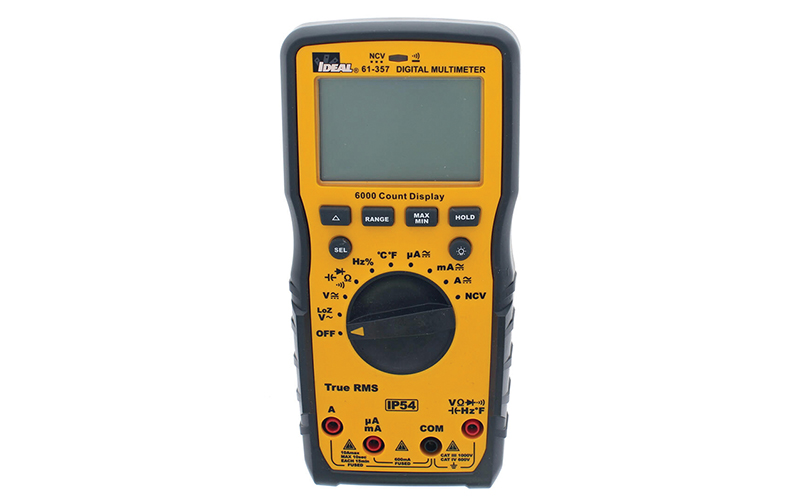
Ideal Electrical 61-357 1,000V digital multimeter
Multimeters: The workhorse
If we were allowed to own only one electrical testing instrument, it would almost certainly be a digital multimeter (DMM). These super versatile tools can measure voltage, resistance, continuity and current. Many of the advanced models can also measure capacitance, frequency and even temperature.
During troubleshooting, the DMM is often the starting point. Is voltage reaching the equipment? Is the fuse open? Is the transformer’s output what it’s supposed to be?
A quality meter also provides the accuracy needed when diagnosing intermittent issues. A circuit that looks fine visually may have excessive voltage drop, poor continuity between components or an open neutral that only a meter can identify. When troubleshooting, guessing just wastes time. Accurate measurements provide answers.
When selecting a meter, look for features such as backlit displays (we don’t always work in well-lit areas), auto-ranging (no need to manually adjust for voltage) and min/max recording (to understand the range the equipment is operating at). True rms meters are extremely helpful when working with variable-frequency drives, electronic ballasts and other nonlinear loads that can produce misleading readings on basic averaging-type meters.
One specification that often gets overlooked is the meter’s CAT rating. CAT III and CAT IV meters are designed to safely withstand the transient overvoltages commonly encountered in distribution panels, feeders and service equipment. Using a meter with the proper category rating is every bit as important as choosing one with the functions we need.
Sycamore, Ill.-based Ideal Electrical’s 61-357 1,000V digital multimeter has all the measuring capabilities we would normally look for (voltage, amperage, resistance and continuity), as well as several other helpful features. It sports True rms readings in addition to a Lo Z (low impedance AC voltage) setting that reduces false readings due to ghost voltages. The meter also measures capacitance, diodes, frequency and temperature. It has a large backlit screen and loud audible notification, and it even has a built-in noncontact voltage detector setting that enables it to sense voltage before touching something. With its combination of features and compact size, it has become one of the meters I reach for most often.
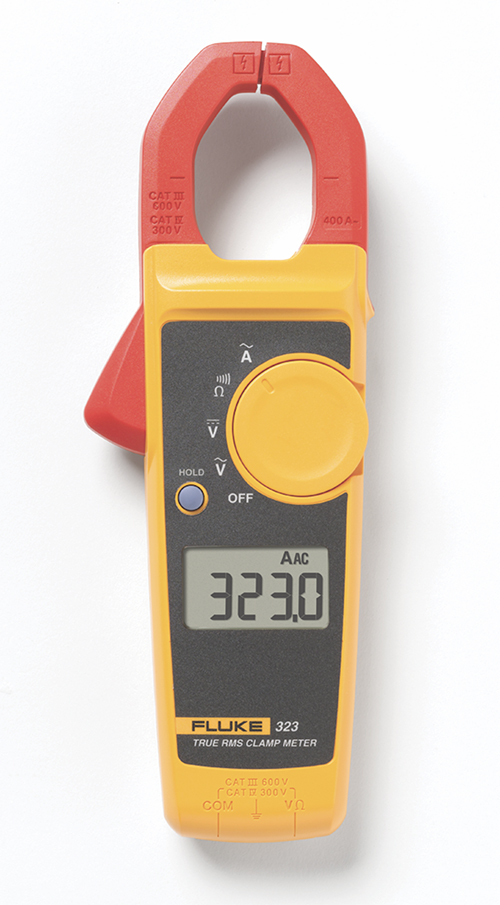
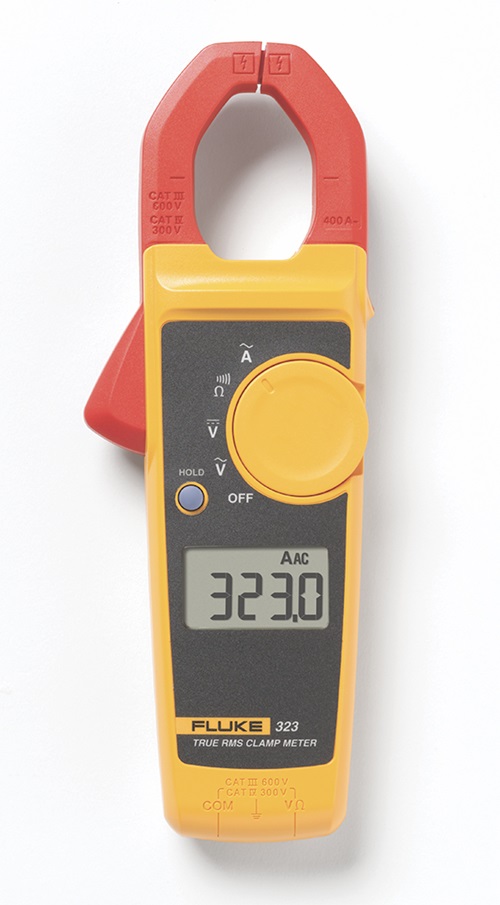
Fluke 323 400A clamp meter
Measuring current, the easy way
Clamp meters simplify one of the most common electrical measurements: current. In lieu of having to disconnect the conductors and place the meter in series with the circuit, clamp meters measure the magnetic field surrounding a conductor. Simply open the jaws up, clamp it around the conductor and instantly read the current.
For example, a motor may have the proper voltage applied to it but still be overloaded mechanically. A clamp meter quickly shows us if the current draw exceeds the motor’s nameplate rating. Likewise, comparing current on all three phases can instantly reveal imbalance or a failed heating element. This makes clamp meters invaluable tools for troubleshooting overloaded circuits, checking motor loads, balancing systems and verifying equipment operation. Current measurements can reveal problems that simple voltage readings alone cannot.
Many of today’s clamp meters include basic multimeter functions (voltage, resistance and continuity) along with current measurement. It’s because of this that most seasoned electricians prefer to carry their clamp meters daily for performing routine troubleshooting without having the unnecessary complexity of a DMM.
Fluke, Everett, Wash., has built a long-standing reputation for producing popular, reliable testing instruments. The Fluke 323 clamp meter is a great example of combining quick current measurement with some functions of a DMM. Its compact size makes it easy to carry throughout the day while still providing measuring capabilities for the most-used values (AC voltage, DC voltage, resistance and continuity). The jaws are large but streamlined, allowing them to measure up to 400A, which is large enough for everyday use. This is the meter I carry on my tool belt, as it does just about all I would need without carrying around a DMM every day.
Other testers: Small tools that save big time
Not everything we test requires a full-featured meter. Some of the most frequently used testing tools are also the simplest. A noncontact voltage tester (sometimes called a hot stick) is one of the first testers many electricians reach for. Simply bringing the tester near an energized conductor will indicate the presence of voltage visually, audibly or both.
It’s worth mentioning that these testers should be used with caution. While they will indicate the presence of voltage, many don’t show the voltage level or whether the neutral is intact. A noncontact voltage detector should never be a replacement for a properly rated meter when verifying an electrically safe work condition. They are excellent screening tools, but they shouldn’t be the final word before touching conductors.
Plug-in receptacle testers are another valuable troubleshooting and verification tool. Within seconds of plugging them into a receptacle, they indicate common wiring errors such as reversed polarity, open neutrals and open grounds. They are also much more efficient to use when checking receptacles as the tester is much smaller than a traditional meter and leads don’t get in the way. GFCI testers add another layer of functionality when verifying proper operation of GFCI devices. They test the devices’ ability to trip before the customer depends on them for protection.
Milwaukee Tool, Brookfield, Wis., offers a set with its 3211-20 digital GFCI receptacle tester and voltage detector. The noncontact voltage detector will detect from 50V to 1,000V AC, visually and audibly, and it even includes a light for working in low-light conditions. The GFCI tester includes a large, digital display that shows the voltage and what wiring conditions are present (open hot, open neutral, reversed polarity or correct wiring). The tester also has an outer rubber molded grip for durability that will withstand a 6-foot drop.
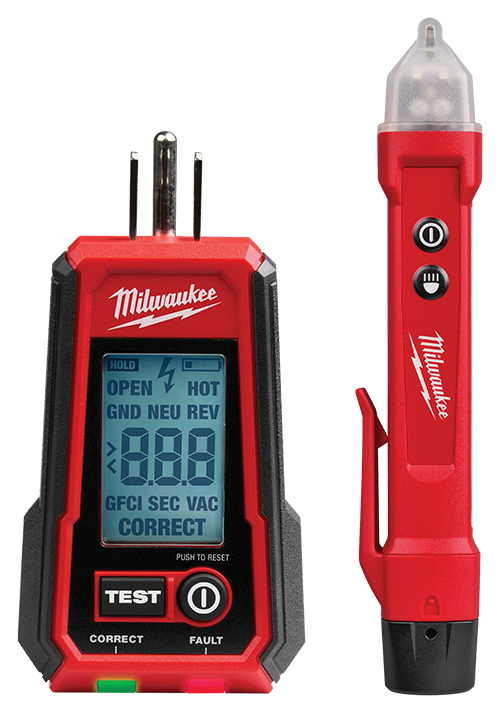
Milwaukee Tool 3211-20 GFCI receptacle tester and voltage detector
Caring for your meter
Even the best meter is only as dependable as its condition. While they are precision instruments, meters tend to be stored in gang boxes, bouncing around in truck beds or surviving harsh job site conditions. A little care and routine maintenance goes a long way toward keeping meters accurate and reliable.
Start by physically protecting the meter. If it came with a protective cover, use it. I’ve seen more than one meter survive a 4-foot fall onto the concrete because it had a protective boot. Store the meter in some type of protective case in an area where heavy items won’t crush the display or damage it. Moisture and heat can shorten the meter’s life, so avoid leaving it exposed to the elements or in a hot vehicle for extended periods.
Inspect the meter’s leads regularly. Cracked insulation, loose tips or exposed conductors are signs that the leads should be replaced. Many inaccurate readings are actually caused by faulty leads, not the meter. Having a spare set of leads is cheap insurance for keeping a meter performing correctly. Weak batteries can also cause issues such as dim displays, unstable readings or complete failure. Replace the batteries frequently and always keep a spare set in the meter’s case.
Another simple way to verify that a meter is operating properly is to check it against a known voltage source before and after performing any measurements. You may remember this as the “live-dead-live” method. Verify the meter on a known energized source, test the circuit you are working on, then return to the known source to confirm the meter is still functioning properly. It’s a simple habit that can prevent a dangerous mistake.
Remember, no meter is indestructible. If it has been dropped from a significant height, been exposed to liquids or subjected to use beyond its ratings, it should be inspected carefully and replaced if there is any doubt about its integrity.
Acing the test
Electrical testing has come a long way from analog meters and simple test lights. We have access to highly accurate digital testing instruments capable of diagnosing complex systems safely and efficiently. Understand which tool fits the task you are performing and use it correctly. Good troubleshooting skills start with accurate measurements, and those begin with quality tools that are maintained properly.
By investing in meters that are dependable, regularly inspected and used within their intended limits, we can improve troubleshooting and protect ourselves and the equipment we are working on. In an industry where safety and precision are of the utmost importance, few investments provide a better return than a reliable meter that delivers accurate readings every time it is used.
Ideal Electrical | Fluke | Milwaukee Tool