The stated purpose of NFPA 70E is to provide a practical safe working area for employees relative to hazards arising from the use of electricity. The requirement to protect employees from electrical hazards must be practical to ensure that electrical workers implement required electrical safe work practices.
NFPA 70E’s goal is to ensure that everyone goes home at the end of the day in the same shape they showed up in at the beginning of their shift. To be considered a qualified person, in addition to demonstrating skills and knowledge related to the construction and operation of the electrical equipment they will be working on, electrical workers must receive training that enables them to identify electrical hazards and reduce the associated risk. Identifying electrical hazards is a function of training. Informative Annex K provides information on electrical hazards.
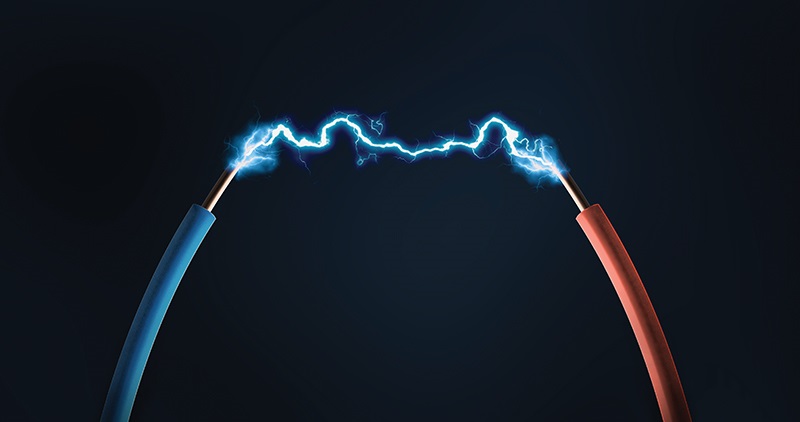
Electrical hazards, as defined In NFPA 70E, include electric shock, arc flash burn, thermal burn and arc blast injury. In general, there are two categories of injury that result from exposure to electrical hazards: electric shock and electrical burns.
Electric shock
Electric shock is current flow through the body. Two points of contact between ungrounded conductors or circuit parts and another circuit conductor or a grounded object, such as a metal enclosure or raceway, are necessary for current flow through the body. The severity of injury or damage to health from electric shock depends on factors including the amount of current through the body, the path the current takes and the amount of time current flows.
In many cases, this is the easiest electrical hazard for workers to understand because many have suffered an electrical shock in the past. There are several studies and publications on the effect of current through the body at different magnitudes. In general, 3 milliamps (mA) through the body will cause a painful electrical shock and muscle contraction, but the individual can let go and current will cease to flow. However, when current reaches approximately 10 mA, the individual cannot let go, and the slang term for this in the field is “hung up.” Higher levels of current flowing through the body can result in the inability to breathe, heart fibrillation and potential loss of limbs. Approximately 98% of fatal occupational electric injuries are from electric shocks.
Case studies reveal a common misconception that electric shock injuries are somehow directly related to the level of voltage exposure. According to one report by the Fire Protection Research Foundation, 40% of electrical incidents involved exposure to 250V or less. Many electrical workers believe that exposure at 480/277V presents a more significant shock hazard than lower voltage. However, injury is not dependent on voltage; injury from electric shock results from current flow through the body.
Electrical burns
Electrical burns can be subdivided into those caused by radiant energy, thermal burns and conduction burns. Radiant energy in an arc flash is intense, releasing blinding light, including ultraviolet and infrared radiation that cause burns. Thermal burns are caused by exposure to hot gases (ejected in an arc), vaporized copper/aluminum and other materials including molten metals. Conduction burns are caused by the conduction of electrical current through parts of the body.
Other hazards
Additional hazards include hearing damage due to extremely high sound levels (in some cases equaling the muzzle blast of a center fire rifle cartridge), traumatic injury from an arc blast (pressure waves) and respiratory system damage from the inhalation of superheated toxic gases.
When an electric arc is created, metals vaporize, resulting in tremendous temperatures that cause an explosive expansion of the surrounding air and the metal in the arc path. When copper vaporizes in an arc, it expands by a factor of 67,000. Imagine a single copper penny in front of you vaporizing in arc. In a millisecond, it creates a conductive plasma fireball with a size of about 2½ to 3 cubic feet and at temperatures that result instantly in second- and third-degree burns on unprotected skin and instant ignition of non-arc-rated clothing.
This extremely rapid expansion of superheated materials creates high pressures, incredible sound levels and shrapnel. The pressures created can easily exceed hundreds or even thousands of pounds per square foot. Injuries could include broken ribs, collapsed lungs, ruptured eardrums and much more.
Protection from electrical hazards begins with identifying the NFPA 70E boundaries (arc flash, limited approach and restricted approach) that trigger safety-driven requirements. All parts of the body inside the arc flash boundary must be protected from arc flash in accordance with the arc flash risk assessment.
Only qualified people are permitted to cross the limited approach boundary. All parts of the body that cross the restricted approach boundary require protection from shock in accordance with the shock risk assessment (typically rubber insulating gloves and leather protectors). All tools that cross the restricted approach boundary must be insulated.
stock.adobe.com/BORIS
About The Author

DOLLARD is retired safety coordinator for IBEW Local 98 in Philadelphia. He is a past member of the UL Electrical Council, NEC Correlating Committee, NEC CMP-10, CMP-13, CMP-15, NFPA 90A/B and NFPA 855. Jim continues to serve on NFPA 70E as a Special Expert. Reach him at [email protected].