Let’s be perfectly honest. We all have a handful of tools that get used on nearly every job: pliers, screwdrivers, wire strippers and drills. However, that drill is only as useful as the accessory attached to it. Two of the most valuable cutting tools are hole saws and step bits. Whether we are installing a new service, roughing in a commercial building or adding a receptacle, chances are we will reach for one or both of these tools before the day is done.
I’ve seen electricians struggle with cutting holes that should have taken only seconds because they were either using the wrong tool or one that is worn out. Experienced electricians can make clean and accurate cuts with minimal effort if they simply understand which tool is designed for the job at hand.
Hole saws and step bits aren’t overly complicated tools, but knowing when to use each one, how to get the best performance out of them and how to make them last can save time, reduce frustration and produce a much cleaner installation in the long run. So, let’s explore some of the newer types of hole saws and step bits out there and discuss how to extend the life of these tools.
Hole saws
If there is one cutting accessory that has earned a permanent place in every electrician’s tool kit, it’s the hole saw. It may not be new, but it is used across the job site—mounting recessed can lights in drywall, installing conduit in panels or junction boxes, and more. The hole saw allows users to create large, clean openings that are not possible with a standard drill bit.
Hole saws work by removing only the outside edge of the material in lieu of drilling through the entire hole. This requires less power than a standard drill bit of the same diameter and generally results in a smoother opening. Understanding the material you are cutting also determines the best style of hole saw. Bi-metal hole saws are best for general use as they are inexpensive and can be used on wood, plastic, drywall and thin metals. Carbide-tooth hole saws are becoming increasingly popular for tougher materials, stay sharp much longer and can be resharpened.
High Point, N.C.-based Diablo Tools’ DHS-CT series of carbide tooth hole saws are designed to be used on materials ranging from wood to metal (and just about everything in between), and they last considerably longer than bi-metal while offer lightning-fast cutting performance. The hole saw is about ¾ inches deeper than a standard hole saw, enabling users to drill much deeper with a single pass. Coupled with Diablo’s Snap-Lock Plus mandrel system, which fits all Diablo hole saws (from 5/8- to 6-inch diameters) and offers quick, toolless plug removal, this one hole saw covers most applications.
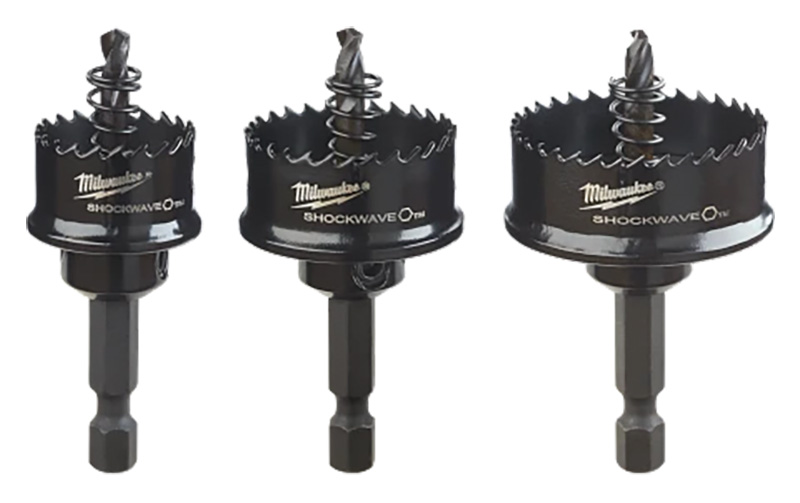
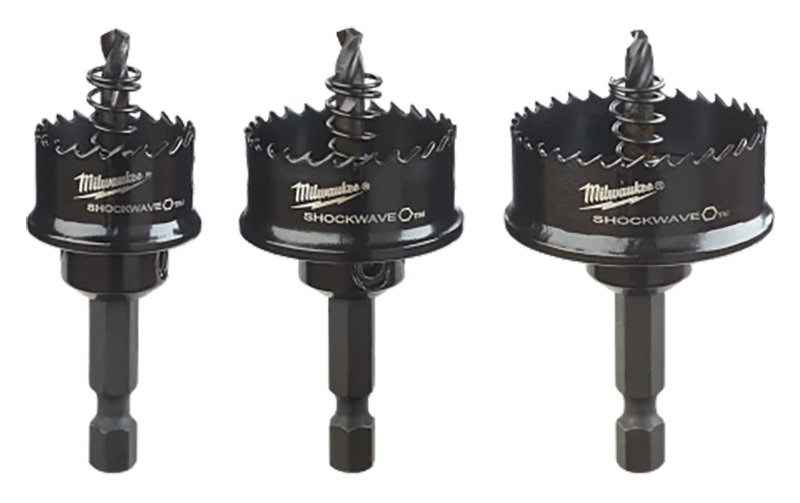
Milwaukee Tool Shockwave Impact hole saw kit
These days, many of us use an impact driver as our go-to drill, but standard hole saws won’t fit into the ¼-in. square shank head of the impact. Luckily for us, manufacturers do offer impact-rated hole saws that cover this requirement.
Brookfield, Wis.-based Milwaukee Tool’s Shockwave impact hole saw kit is a three-piece set, designed to work with impact drivers. The set has the three most commonly used sizes (7/8 inch, 11/8-inch and 13/8 inch) that produce burr-free cuts much faster than a standard bi-metal hole saw. The hole saws also feature a spring that automatically ejects the slug and a stop shoulder that prevents overdrilling into the material and potential damage.
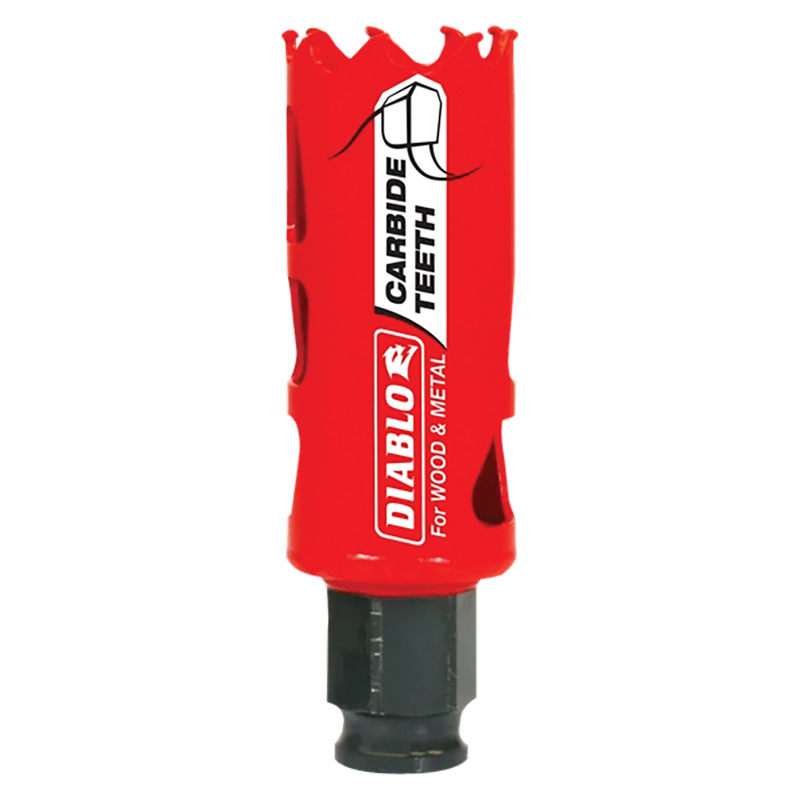
Diablo carbide teeth hole saw for wood and metal
Step bits
If I had to pick one drill accessory that has saved me the most time over the years, it would have to be the step bit. It’s just one of those tools that doesn’t look particularly impressive until you use it. And once you do, it leaves you wondering how you ever got by without one. Designed for metal surfaces on everything from panels and junction boxes to enclosures, a good step bit is hard to beat.
A step bit holds several advantages over a conventional drill bit. First, a standard drill bit can only produce one hole size, whereas a step bit gradually increases in diameter as it moves through a series of steps. Each step represents a different hole size, allowing one step bit to replace a whole set of drill bits.
Another advantage is the clean hole it produces. If you have ever tried to enlarge a small hole with a standard twist drill bit, you know how easy it is for the bit to grab or chatter, leaving a jagged opening. A step bit cuts much more smoothly as only one cutting edge is engaged at a time, resulting in a nice round hole that requires little or no cleanup before installing a connector or fitting.
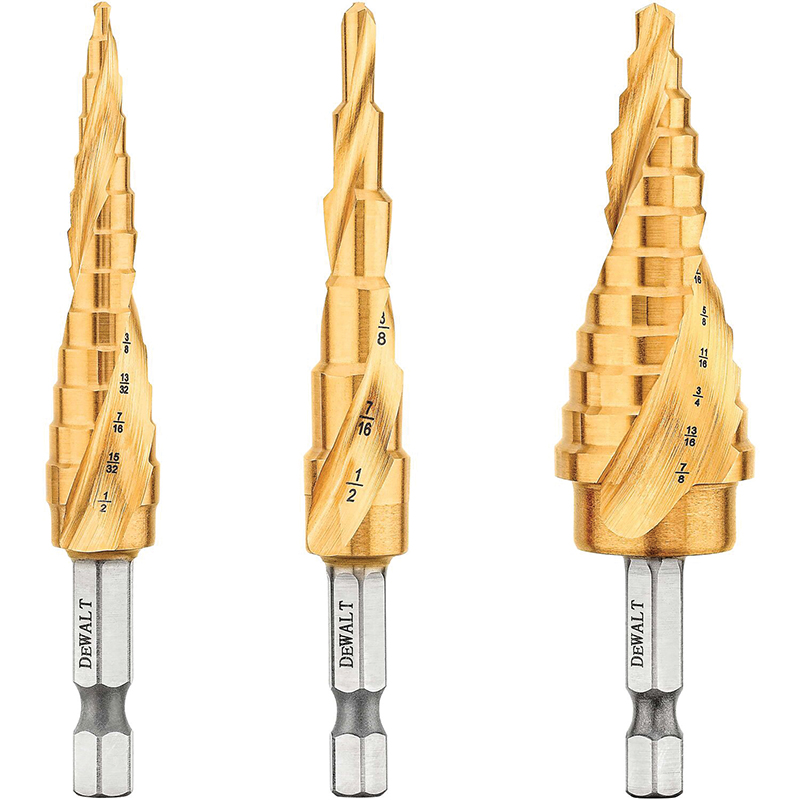
DeWalt Impact-ready titanium nitride coated step drill bit set
Again, since many electricians prefer to use impact drills for everything, manufacturers have developed impact-rated step bits. The impact-ready titanium nitride coated set from DeWalt, Towson, Md., is an economical choice to start with. The set has two bits that range from 1/8 inch to ½ inch (ideal for items such as bolts and screws) and one bit that covers from 1/8 inch to 7/8 inch (good for ½-inch conduit fittings). Each bit features a titanium nitride coating and a dual flute spiral design that extends bit life and provides better chip removal. The bits also include a split point tip that increases speed when starting the hole.
Milwaukee Tool also makes an impact-rated step bit with the Shockwave impact duty electrical kit. The set includes three bits ranging from 1/8 inch all the way up to 13/8 inches that have been optimized for use in an impact drill.
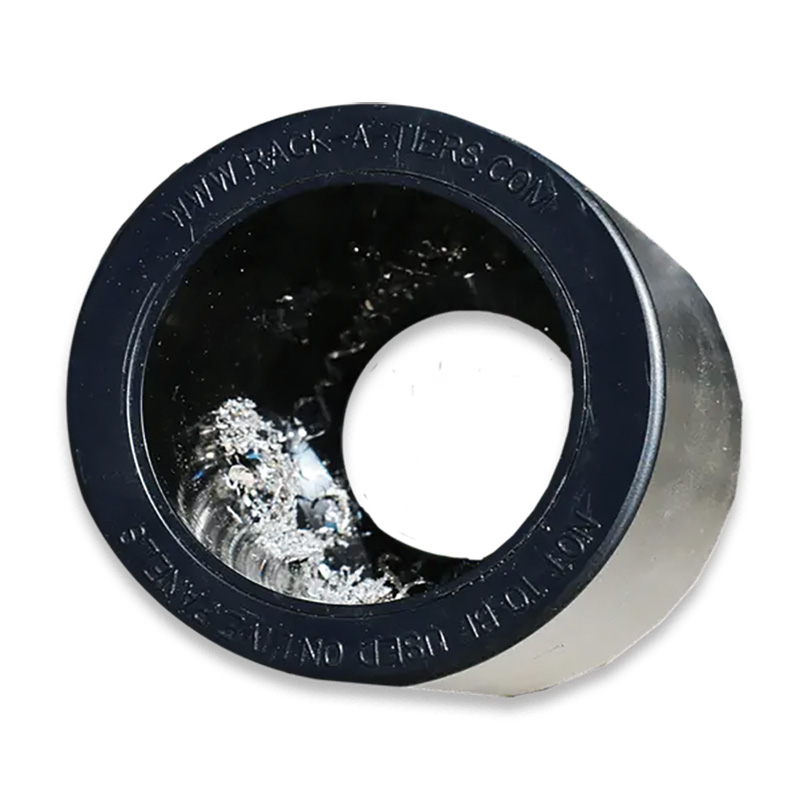
Rack-A-Tiers chip catcher
The shanks have been designed to withstand early breakage, while the special tip provides fast and accurate hole starting. The bits also feature a titanium aluminum coating that dramatically extends the bit’s life.
Tips and tricks
As with any cutting tool, hole saws and step bits are consumable items. They won’t stay sharp forever, but how we use and care for them has a tremendous impact on longevity. I’ve seen workers burn up brand-new cutting tools on a single panel, while another person can use the same tool for a month because they understand a few basic principles.
Heat is the biggest enemy of any cutting surface. Unless the tool is specifically designed for high speed, consider slowing the drill down and don’t yank the trigger all the way. Slower cutting speeds generate less heat, give the tool time to clear chips and provide users with much better control. Also, be sure to let the tool do the work. If you are putting your full body weight into the drill, something probably isn’t right. Either the cutting edge has dulled, the drill speed is incorrect or the tool isn’t designed for that particular material. Excessive pressure creates more heat, increases chances of binding and puts unnecessary stress on the drill and the cutting accessory.
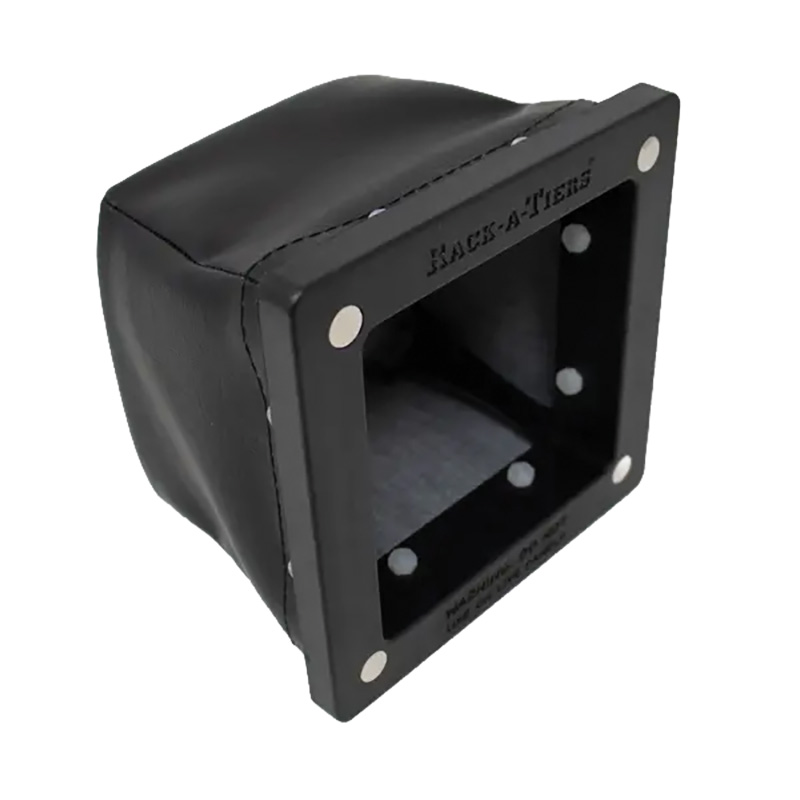
Rack-A-Tiers dirt bag
Accessorize
Drill bit storage deserves more attention than it receives. Haphazardly tossing cutting tools into a bucket or the bottom of a gang box allows the cutter to bang against other metal objects and can dull or damage the teeth.
DeWalt’s key ring bit holder set is a simple, but cool, storage solution. It features a carabiner with five bit holders attached to it. The carabiner can be clipped to a pouch or vest, and the bit holders securely hold the ¼-inch shank that impact drills use. They are also color-coded for easy identification.
Another problem with an interesting solution is the metal shavings generated when we drill boxes or panels. They are a nuisance to clean up and can damage the inner electrical components. While many of us either vacuum up the debris or use cardboard to keep the shavings corralled, there are other options.
The chip catcher and the dirt bag, both available from Rack-A-Tiers, Victoria, British Columbia, are designed to keep metal shavings from flying everywhere. The chip catcher attaches to the top or bottom of the metal surface as users drill, and the rare earth magnets inside capture the metal shavings as the hole is made. When the hole is completed, simply slide the plastic inner lining out and the metal shavings are released.
The dirt bag functions by attaching to the inside of a panel or pull box through rare earth magnets and uses a pouch to catch the shavings. When you are done drilling, slide the magnet out and dump the shavings into the trash. Both tools are invaluable when working with panels or large junction boxes.
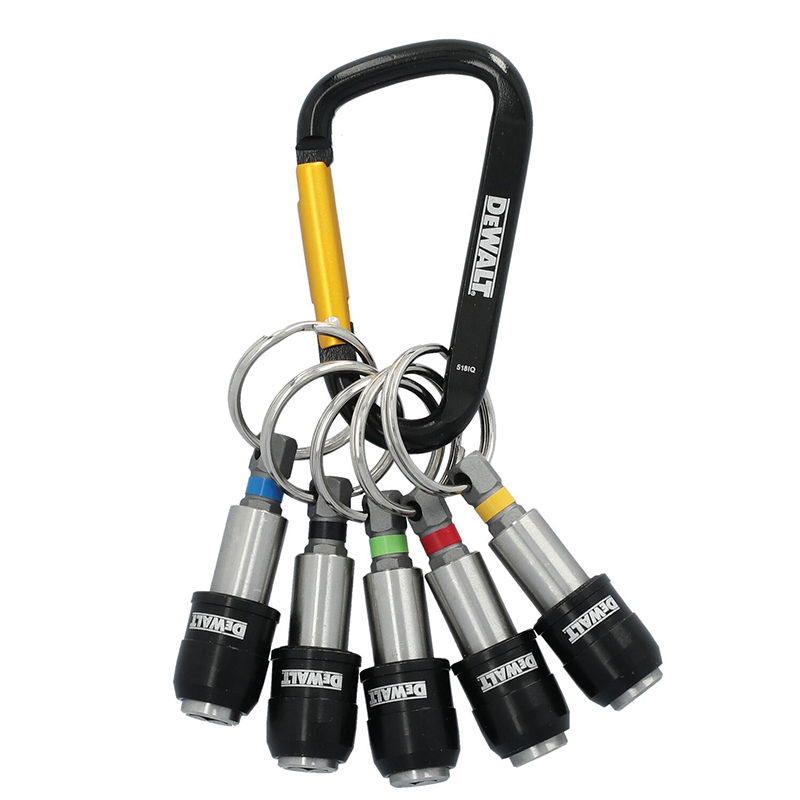
DeWalt key ring bit holder set
A cut above
Hole saws and step bits may not get the attention that our drills do, but they are the business end of the hole drilling operation. The quality of the holes often determines how professional the finished product looks. Taking a little bit of extra time to choose the correct cutting tool, using the proper speed and letting the tool do the work will save time in the long run, reduce frustration and extend the equipment’s life.
Investing in quality cutting tools, taking care of them properly and replacing them when they’ve reached the end of their life is part of working efficiently. The cleaner the cut, the easier the installation and the better the finished product will look.
Rack-A-Tier | DeWalt | Milwaukee Tool | Diablo