You're reading an older article from ELECTRICAL CONTRACTOR. Some content, such as code-related information, may be outdated. Visit our homepage to view the most up-to-date articles.
A number of cities have embraced light-emitting diodes (LEDs) as an efficient street lighting technology. Making the transition is not a simple endeavor, and the U.S. Department of Energy’s (DOE) Gateway Demonstration program helps them evaluate the technology. Recently, the DOE published a Gateway report on Portland, Ore.’s LED streetlight conversion.
The city is midway through the process of converting its street lighting system from high-pressure sodium (HPS) to LED technology. The initial phase of the conversion involved the city purchasing a large portion of the lighting infrastructure from the local utility, Portland General Electric (PGE). Consequently, the system is managed under a complex billing arrangement between the two parties in which ownership and maintenance varies for different categories of fixtures.
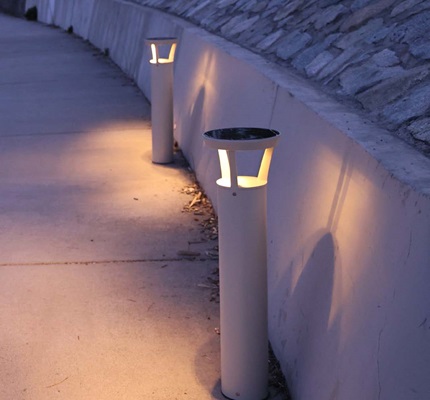
The system includes approximately 55,100 streetlights, covering 147 square miles. Approximately 49,000 of the fixtures are standard cobra head fixtures, and 5,500 are post-top lights. The inventory also includes 600 shoebox and other more specialty types.
According to the DOE report, the decision to convert to LEDs involved political, technical and financial issues. The Portland Bureau of Transportation (PBOT), which maintains the traffic signals, streetlights and intelligent transportation systems, was instrumental in helping the city overcome some of the challenges.
The report projects dollar savings from Portland’s completed conversion to exceed $2 million per year and to repay the total $18.5 million investment in the upgraded system within about eight years.
The DOE’s Gateway demonstrations enable detailed LED product evaluation and hands-on experience that cannot be replicated in a lab. High-performance LED products are selected and installed in real-world applications, providing valuable data and experience on product performance and cost effectiveness. The DOE shares the results of completed demonstration projects, publishing detailed reports and briefs. The reports include analysis of data collected, projected energy savings, payback analysis, and user feedback.
Lighting is not the only frontier where the DOE has teamed up with state and local governments to conserve energy. As big data has become the currency of the digital age, decision-makers need to find new ways to process that information. Recognizing that dynamic, the DOE has also launched a program to help government officials manage data regarding building energy efficiency. That information will allow them to identify opportunities to make improvements in their jurisdictions.
On Nov. 9, the DOE announced the launch of the SEED Collaborative. This strategic effort brings together the Natural Defenses Council, the Institute for Market Transformation, the National League of Cities, and the National Association of State Energy Officials, to assist state and local governments.
It builds on the success of the DOE’s software application, Standard Energy Efficiency Data (SEED) Platform, which is one of the tools in the so-called Better Buildings Toolkit. Together, all of these programs are designed to help government with the monumental task of managing the huge amounts of complex data being generated concerning building energy.
According to Dr. Kathleen Hogan, Deputy Assistant Secretary for Energy Efficiency, the new SEED Collaborative will help government officials better manage the “unprecedented amount of new data” that is being generated and apply it toward innovation in energy efficiency.
The Collaborative will offer participating governments with access to an open source software application, technical assistance, free hosting services, access to peer exchange, and other services. Through collaboration, the effort is intended to help identify, establish and standardize best practices as they concern management and processing of building performance data, all with the goal of creating greater efficiency.
The DOE will announce the cities and states that have been chosen to participate in the project in early 2016. Participation in the SEED Collaborative will be a three-year commitment.
The DOE continues to prove to be an ally to the energy industry, promoting innovation and funding projects from which contractors across the country can benefit.
About The Author

LAEZMAN is a Los Angeles-based freelance writer who has been covering renewable power for more than 10 years. He may be reached at [email protected].