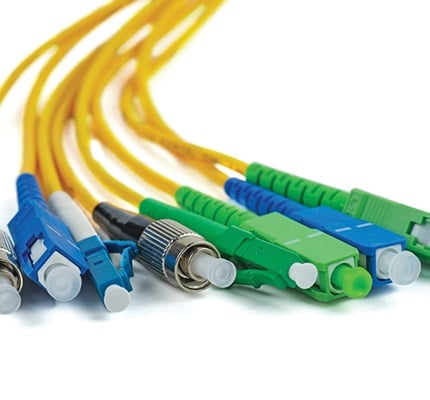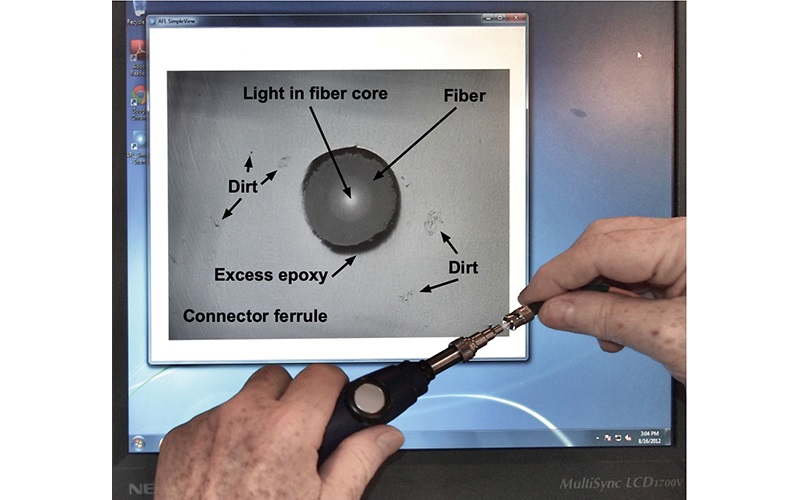
Dirty connectors are one of the major problems in fiber optics and cause high connector loss and high reflectance that contaminates transceiver ports. They can even contaminate clean connectors if mated with them. Network operators claim that more than half of all network problems can be traced to dirty connectors causing connection problems.
Keeping it clean
At one of the first visits I made to a fiber optic network facility many years ago, I watched as a technician explained that the fiber in a Biconic connector was so small that it was sensitive to any dirt or particulate on the connector. Every connector needed cleaning before mating, he explained, and he demonstrated how he did it by wiping it on his shirt several times before plugging it in.
While his intentions were good, his method, at least with our current knowledge, was not. The shirt was neither clean nor lint free. It probably added more contamination to the connector than it removed.
Typical airborne dirt is about the size of the light-carrying core of single-mode fiber. Dirt can cause high attenuation and reflectance, which can cause transmission problems in today’s high-speed networks.
Mating a dirty connector to a clean one will usually transfer dirt at the connection and end up dirtying both connectors. If the dirt particles are hard, they can scratch the end surfaces of both connectors because of the pressure of the spring-loaded mating methods used.
Connectors can get dirty easily if the ferrule end is exposed to a dirty atmosphere or touched to a dirty surface (like a fingertip). Other types of contamination are a problem, too. The oil and skin particles from your fingertip can easily contaminate the end of a connector. We preach keeping protective caps on the connectors except when mated, but those on the connector ferrule can introduce dirt themselves, which is perhaps why they are called “dust caps.”
All connectors should be inspected, cleaned if needed and inspected again to ensure the cleaning was done thoroughly before mating to another connector or inserting into a transceiver port. This applies to every connector, not just those you find on a patch panel, but brand new patchcords sealed in a plastic envelope. Remember those “dust caps”?
Keeping it clean, correctly
The technique for cleaning fiber optic connectors has evolved with the development of special fiber optic cleaning products. In the beginning, cleaning was done primarily with 99% isopropyl alcohol and clean, lint-free wipes.
The proper process was to wet a wipe with alcohol, swab the connector ferrule end several times, then dry it with a dry wipe. Without the drying process, the alcohol would evaporate and leave a residue. Alcohol didn’t always clean thoroughly, and it had another problem: it was flammable. Sealed lint-free pads saturated with alcohol were very popular for cleaning fiber optic connectors.
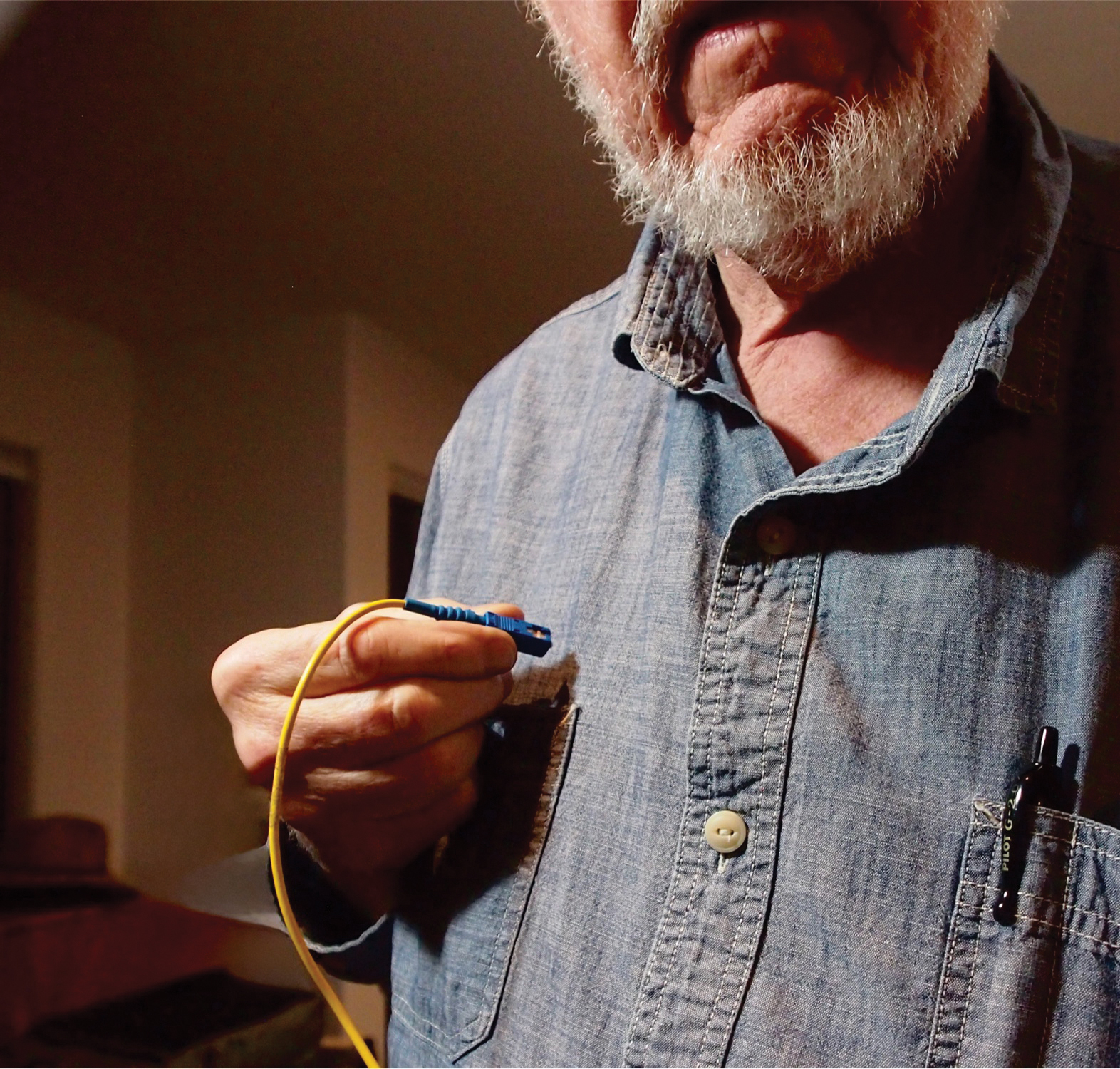 | 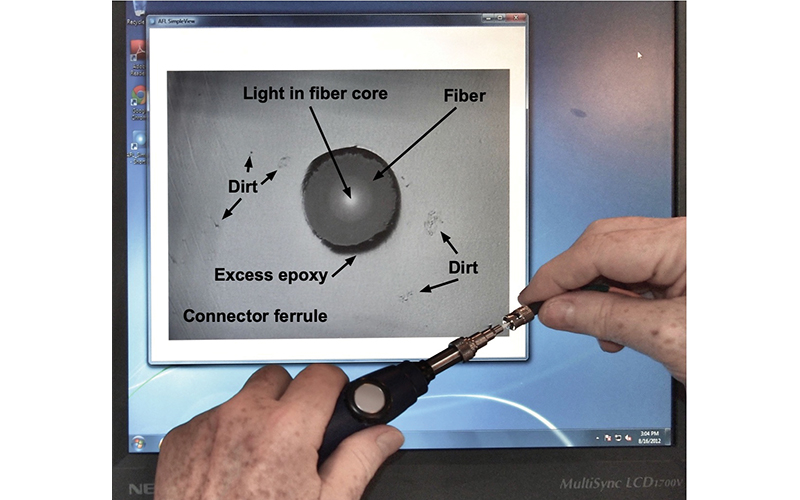 | |
Wiping a conductor on clothing isn’t the way to clean it. | An example of what you might see when inspecting a connector. |
As the fiber optic industry grew larger, chemical cleaning suppliers developed specific fiber optic connector cleaners, many derived from those used in clean room electronic component manufacturing. Today, there are numerous suppliers of cleaning solutions and kits designed specifically for fiber optics. Some manufacturers offer fiber optic cleaning kits with all the products needed.
Some manufacturers also developed dry cleaning products that required no liquid solvents for fiber optic connectors. The connector end was wiped along a special fabric tape in a cassette that would clean the connector. Special small swabs were developed to clean a single connector or reach inside mating adapters or transceiver ports to clean hidden connectors.
Connectors other than the normal ferrule connectors like the SC or LC require special cleaning tools and procedures. Manufacturers offer special cleaners for array connectors like the MPO, expanded beam and some multifiber military connectors.
Remember, all these fiber optic cleaning products are single-use only. Once they are used to clean a connector, they should be discarded to prevent transferring the dirt from one connector to another.
Inspect—clean—inspect! The goal is to have a perfectly clean connector. The process is to inspect and, if necessary, clean the connector. After cleaning, it is necessary to inspect it again to ensure the cleaning was properly completed. Repeat as necessary until the connector is acceptable.
This month’s online column covers inspecting fiber optic connectors.
Jim Hayes
About The Author

HAYES is a VDV writer and educator and the president of the Fiber Optic Association. Find him at www.JimHayes.com.