By Scott Patchan
Data center projects demand conduit systems that support speed, reliability and long-term infrastructure protection. Underground conduit runs must accommodate dense cabling, efficient cable pulling, complex duct bank layouts and demanding installation schedules. However, traditional materials can introduce challenges including elbow burn-through, heavy handling, long pulls, elevated heat concerns and costly repairs.
Data Center Project Challenges
1. Cost
Traditional conduit materials such as steel and PVC-coated steel are significantly heavier than fiberglass. Added weight can increase labor requirements, material costs, shipping costs and handling challenges.
2. Complex buried installation
Data center campuses often involve extensive underground conduit systems, multiple duct banks and tight construction schedules. Heavy conduit materials can require additional equipment and manpower, adding time, complexity and risk to installation.
3. Dense cabling and heat
Data centers require heavy cabling infrastructure. As conduit pathways become more congested, project teams need materials that can tolerate demanding temperature conditions and support dependable cable protection.
4. Elbow burn-through
Traditional elbows used in underground systems, such as PVC, can experience burn-through during high-friction cable pulls. This is especially important in data center projects with dense or extended cable runs. Burn-through can compromise system integrity and lead to costly conduit repairs or replacements.
5. Long cable pulls
Long pulls through traditional conduit can create excessive friction, increasing installation time and the potential for conduit or cable compromise, particularly at bends.
6. Cable fault concerns
Cable faults that melt or weld cable to the inside of the conduit can lead to difficult and expensive repairs. In mission-critical environments, serviceability matters.
Fiberglass Conduit Elbows: Practical Solutions for Data Centers
Champion Duct® fiberglass conduit elbows address these challenges with material advantages that support better project outcomes for data center infrastructure.
Lower material and installation costs
Fiberglass elbows are lighter than GRC, PVC-coated steel and most sizes of PVC, helping reduce material handling demands and installation labor. The light weight of Champion Fiberglass conduit allows installers to position and connect elbows more efficiently, often without specialized equipment. Made in America fiberglass conduit also supports savings in material, labor and shipping.
Seamless installation
Because fiberglass elbows are lighter and easier to handle than traditional options, they help simplify buried installations. Fiberglass installs faster than most sizes of other electrical conduit types per the NECA Manual of Labor Units. Contractors are frequently amazed at the ease with which a single elbow can be picked up by a person at the job site. Additionally, gasketed connections speed installation and reduce the need for heavy equipment, lowering costs and installation risks in tight or challenging spaces.
Temperature tolerance for dense cabling
Dense cabling can create demanding conditions for conduit systems. Champion Fiberglass conduit is temperature tolerant and UL listed to 110°C, a solution suited for data center environments with heavy cable infrastructure.
No burn-through during cable pulling
Fiberglass conduit’s mechanical strength withstands high-tension cable pulling without burn-through. And flexural strength helps eliminate the risk of cable damage when pulling. This reliability eliminates the risk of elbow damage in high-stress areas, lowering maintenance needs.
Low coefficient of friction
With a low coefficient of friction, 0.38 compared to 0.55 for PVC-coated steel and galvanized rigid steel and 0.90 for SCH 40 and 80, fiberglass allows cables to be pulled more smoothly through conduit with less labor time, cost and risk.
Cable fault resistance
Fiberglass conduit is cable fault resistant, meaning the cable does not melt or weld to the inside of the conduit under certain fault conditions as it can with PVC or steel. A key benefit is serviceability. Installers can pull through and replace the faulted cable because the conduit remains undamaged.
Case Study: Fiberglass Conduit Success in a Data Center
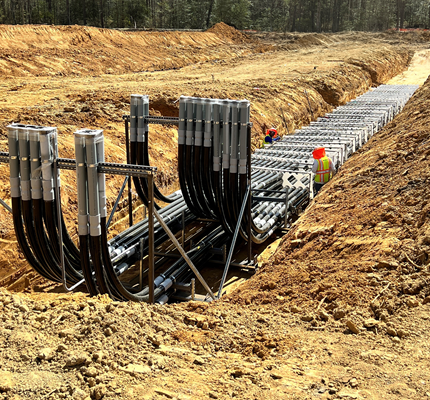
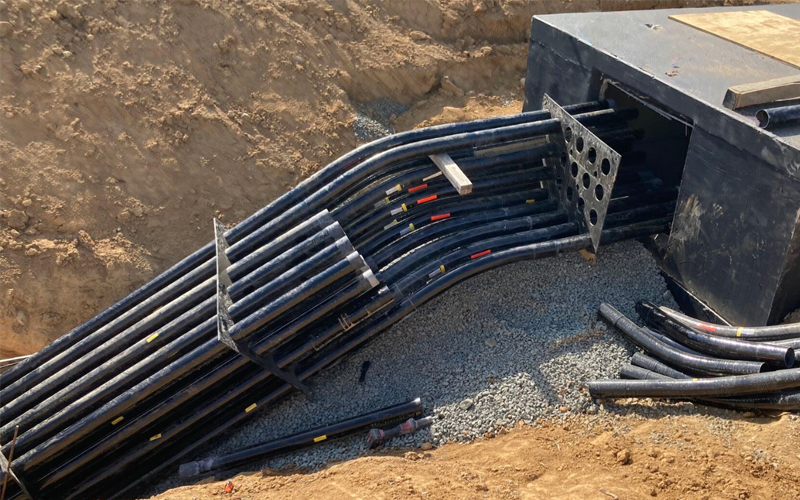
In Virginia’s Data Center Alley, contractor Rosendin Electric faced an extensive installation for telecom and transformer duct banks. The project team selected Champion Fiberglass® conduit and elbows, gaining the benefit of lightweight material that reduced equipment needs and improved safety in the trench.
Prefabricated duct banks helped streamline installation, with Champion Fiberglass providing guidance and support throughout the process.
Compared to PVC, fiberglass lowered material costs by almost 50%, while total labor savings reached 60%. The project achieved a 63% productivity increase over traditional materials, helping the work finish on time and on budget.
Get the full details of this case study here.
Champion Duct® fiberglass conduit elbows provide data center project teams with practical advantages for underground electrical infrastructure, including easier installation, smoother cable pulls, cable fault resistance, dense cabling support and long-term durability. For projects where reliability, speed and serviceability matter, fiberglass offers a smart solution for demanding data center environments.