You're reading an older article from ELECTRICAL CONTRACTOR. Some content, such as code-related information, may be outdated. Visit our homepage to view the most up-to-date articles.
According to the U.S. Bureau of Labor Statistics, more than 50 workers die annually in excavation and trenching accidents. Though most electricians are not directly involved in excavating operations, electrical workers may get involved when completing underground line work. As a result, the Occupational Safety and Health Administration (OSHA) has some specific guidelines for this type of work.
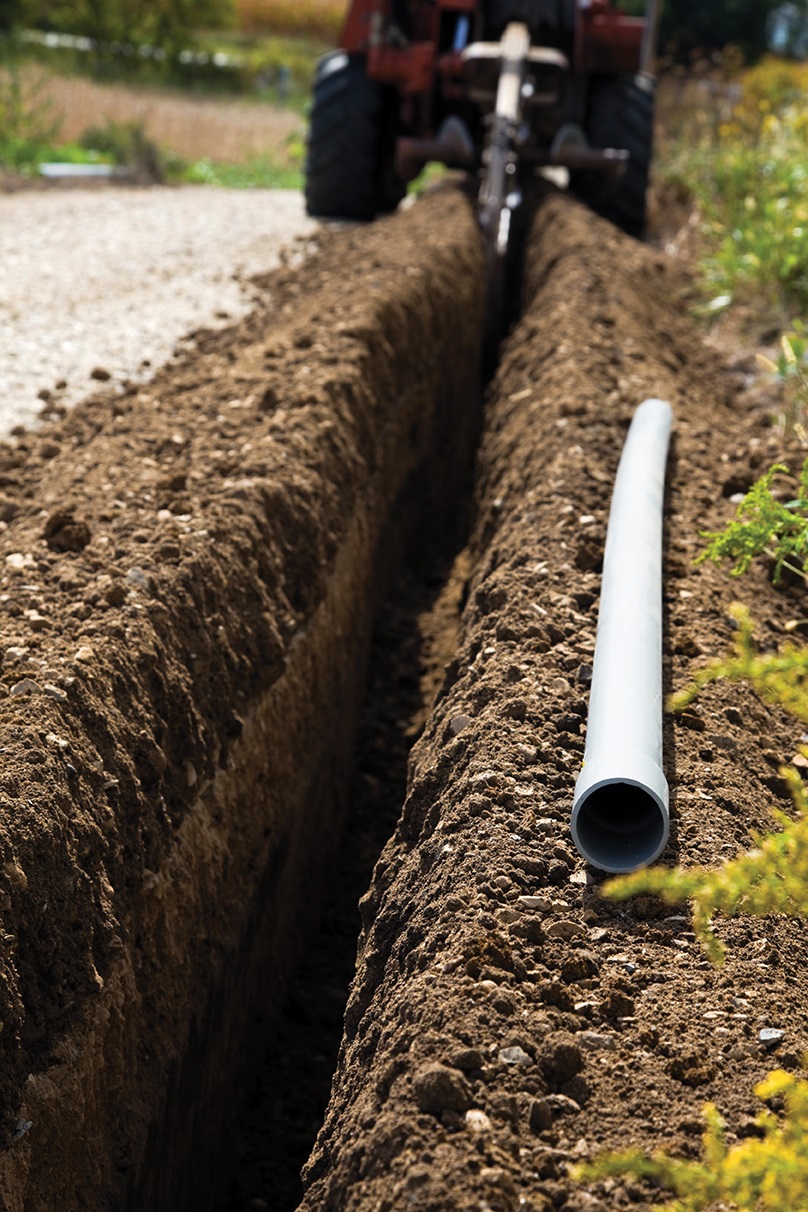
First, it is important to understand that an excavation is a manmade trench, cut, cavity or depression in the ground that is formed by earth removal. Typically, when working in this environment, a person could encounter three major risk factors: cave-ins, confined space hazards and underground utilities.
Fortunately, some basic safety protocols can help prevent accidents. One of the first OSHA-required precautions is that there must always be a “competent person” on hand and available throughout the excavation process. A competent person is someone who is able to identify the hazards and dangerous work conditions and take action or corrective measures to eliminate those hazards.
It is important to ensure that an excavation area is properly marked. Contact the work site’s property owners and relevant utilities to ensure that this marking has been done. Most states require a minimum of 24–48 hours to clear and mark an area before commencing work.
Prior to beginning an excavation operation, workers should know what each marking on the work site indicates. Utilities usually use the following colors as markings for identification purposes: white (proposed excavation); pink (temporary survey markings); red (electric lines and lighting cables); yellow (gas, oil, petroleum and steam lines); orange (communication lines, cables or alarm signals); blue (water); purple (reclaimed water or irrigation lines); and green (sewer and drain lines).
When using machinery to excavate an area, it is imperative to ensure that there is no risk of coming into contact with any underground utility. If excavation operations are performed near underground utilities, hand digging or sucker vacuums should be used. This especially holds true when digging within 5 feet of energized lines or equipment. Spoil piles should always be a minimum of 2 feet from the edge of the excavation.
In the event that a gas line is struck when digging, work should be stopped immediately. The area should be cleared, and the gas company, the public, and police and fire department should be notified. It is not safe to attempt to fill in the excavation.
The gas should be allowed to dissipate into the atmosphere, and all equipment and devices that may ignite the leak or cause an explosion should be shut down. This includes vehicles and even two-way radios. If the leak is on fire, let it burn.
If a fiber optic cable is struck or cut, do not look directly at the cut. The light can damage eyesight. Contact the communication company as soon as possible. If a water or sewer line is struck, contact the appropriate utility immediately.
When an excavation is greater than 5 feet deep, the sides must be shored or sloped. The sloping and benching systems must be stable enough to protect workers in the excavation. According to OSHA’s Trenching and Excavating Fact Sheet, there are several different protective systems. They are as follows: “Benching means a method of protecting workers from cave-ins by excavating the sides of an excavation to form one or a series of horizontal levels or steps, usually with vertical or near vertical surfaces between levels. Benching cannot be done in Type C soil [the least stable].
“Sloping involves cutting back the trench wall at an angle inclined away from the excavation.
“Shoring requires installing aluminum hydraulic or other types of support to prevent soil movement and cave-ins.
“Shielding protects workers by using trench boxes or other types of supports to prevent soil cave-ins.”
Understanding the different types of soil and familiarizing workers with additional required protective systems can also be helpful in preventing accidents.
Excavations greater than 4 feet deep must have a safe means of exit. This may include a ladder or stepladder as an escape option. A ladder must extend 3 feet above the excavation.
When working in an excavation, it is never safe to travel more than 25 feet laterally to get out of the work area. Any distance greater than that would be far too risky for potential cave-ins.
Upon completion of the dig, the excavation area should be filled in as much as possible. If any portion remains open, barriers must be in place to protect site workers and the public. Barriers may include lighted warning devices, rope barriers, wood barricades or guardrails.
Following these basic safety strategies can reduce the risk of injury or death when working in or around excavating and trenching operations. For more information, visit www.osha.gov.
About The Author

O’CONNOR is safety and regulatory affairs manager for Intec, a safety consulting, training and publishing firm. Reach him at [email protected].