You're reading an older article from ELECTRICAL CONTRACTOR. Some content, such as code-related information, may be outdated. Visit our homepage to view the most up-to-date articles.
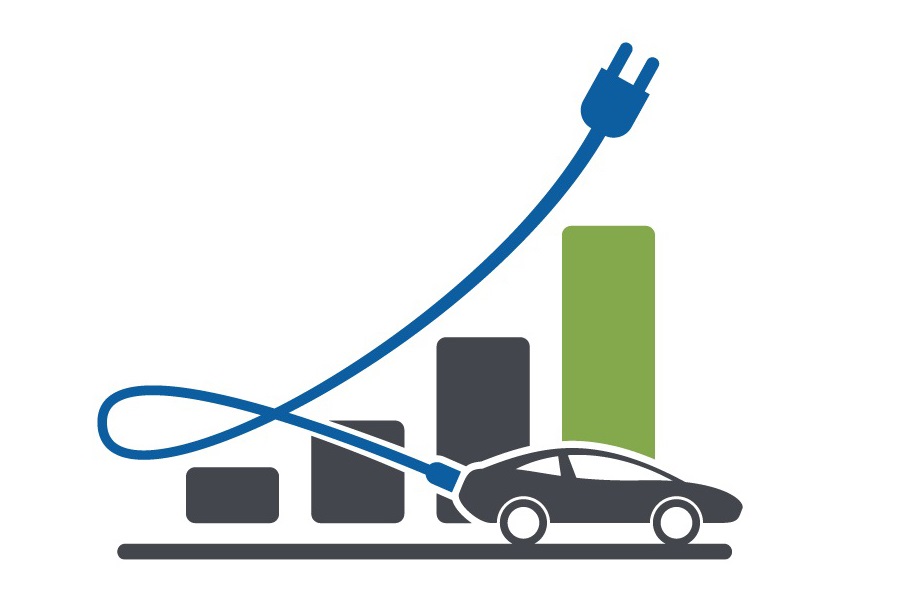
Electric vehicles (EVs) appear to be in a boom cycle in 2014. Year-to-date figures at the end of June were up 33 percent compared to 2013’s numbers, and May, June and July all posted sales in record or near-record territory, according to the EV-tracking website InsideEVs.com. At the end of July, the Electric Drive Transportation Association stated that the total number of EVs on the road had almost doubled in just the previous year.
A little perspective is in order, of course, before we start sounding death knells for traditional fossil-fuel-burning vehicles. For example, the near-doubling of EVs on the road in the last year brings the overall total to 234,000, or less than one-one-thousandth of the 247.9 million total light-duty vehicles recorded by Experian Automotive in the second quarter of 2013. But a near doubling of EVs still means a growing business for electrical contractors that install EV supply equipment (EVSE)—what the rest of us call charging stations.
The largest market for chargers is in vehicle owners’ garages. Most current EV owners are also homeowners, and they do the majority of their charging overnight, according to a late-2013 EVSE market report from Navigant Research. However, the group sees the commercial market growing as EVs become popular across a broader range of car buyers, including apartment dwellers.
Michael Moser, president of EV Charge Solutions, a Canandaigua, N.Y.-based EVSE distributor, sees the charging- equipment market growth firsthand.
“We’re bidding on and selling equipment all over the country,” he said.
His primary customers include electrical contractors, colleges and universities, and municipalities, and he is beginning to see growth in retail, hotels and restaurants, especially if there is funding available.
Yes, government funding is still a part of the EVSE equation in a number of states, although a federal tax credit expired at the end of 2013. Moser believes this credit could be renewed, and such support could be vital as more vehicles come equipped to accept direct current (DC) fast charging.
Most existing commercial charging stations are Level 2 alternating current (AC) units, which is a step up from basic 110-volt (V), Level 1 units, but the Level 2 units still require four or more hours of charging time to fully repower an EV’s batteries. Newer 50-kilowatt (kW) DC fast-charging units, however, can accomplish the same feat in 20 minutes or so but at a cost. While capital expenses for this equipment are falling quickly—possibly below $15,000 in some cases—installation can double that price, especially if facility upgrades are required to handle the added electricity supply.
The added expense of 50-kW fast charging doesn’t end with the installation either. Supplying vehicles at that charge rate can drive a facility’s demand charge (an added fee or multiplier commercial electric-utility customers pay, based on their peak electricity usage) through the roof.
Recognizing the potential unafford- ability of operating 50-kW equipment for many business owners, manufacturers have begun selling slightly slower charging 20–25-kW units that are much less expensive to operate. Though they may draw half the power from the grid, full charging still can be achieved in less than two hours and can get a battery up to 80 percent charged, from a 30 percent level, in less than 30 minutes.
“It’s not a linear drop-off,” said Lisa Jeram, a senior consultant at Navigant Research and a co-author of the group’s 2013 EVSE market update. “But you can then ameliorate some of the issues about demand charges and upgrading your electrical system.”
But with conversations about DC fast charging, whether at the 20-kW or 50-kW scale, concerns about standards and charger/vehicle compatibility can arise. Not all vehicles actually have the connectors required to accept fast-charge equipment, though that’s quickly changing. The challenge lies in the kind of connector they use.
The Nissan Leaf (which has outsold other models through July 2014), along with several other Japanese and Korean models, uses an onboard fast-charge connector known by the abbreviation CHAdeMO, for “CHArge de MOve,” and is a pun for the Japanese phrase “O cha demo ikaga desuka,” which means “Let’s have a tea while charging.” Ford, Chevrolet and several European makers use a connector style developed by the Society of Automotive Engineers (SAE) called a Combo charger. Tesla uses another connector of its own design.
Because connectors can only accept compatible charging equipment, much talk has been made about a “standards war” in the last year or so, which some have compared to the Betamax/VHS battle of the 1980s. Hand-wringers have suggested potential EV buyers could be flummoxed by unclear charging availability and put off their purchases. However, EVSE manufacturers are quick to distance themselves from the controversy.
“There is no standards war,” said Andy Bartosh, ABB’s North American program manager for EV charging infrastructure.
His company has introduced the first charging stations equipped with connectors for both CHAdeMO and Combo designs. He added that more than 90 percent of his inquiries now are related to the just-released dual-designed Terra 53 CJ, and he’s bullish on the commercial fast-charging market.
“The cars are here, the chargers are here, and there’s a real feeling that a critical mass is here,” he said.
About The Author

ROSS has covered building and energy technologies and electric-utility business issues for more than 25 years. Contact him at [email protected].